Former NFL player Wade Davis now speaks publicly about what it was like to be closeted
in the National Football League (Photos courtesy Wade Davis)
When Wade Davis came out as a gay man last summer and
spoke publicly about what it was like to be closeted in the National
Football League, the news not only made waves in the NFL, but also
forced his parents to deal with the fact their son is gay.
Former NFL player Wade Davis
“I grew
up in the south and my family is very religious,” said the
Louisiana-born Davis, who began his professional football career after
attending Weber State University in Utah. “Thankfully, my mother has
come full circle. She used to be very much against (homosexuality),
whereas my father still refers to it as a ‘lifestyle choice.’ To be
honest, my father and I are still not in a good place. But it took me 15
years to be okay with being gay, so I feel I need to give them time as
well.”
Davis, a former defensive back, never cracked a 53-man NFL
roster. But he was signed as a free agent by the Tennessee Titans and
played in the preseason for the Washington Redskins and Seattle Seahawks
before moving on to NFL Europe, where he played for the Barcelona
Dragons and the Berlin Thunder.
This past weekend, Davis closed
Montreal’s fifth annual Afro-Caribbean gay and lesbian film festival,
Massimadi, with a free public lecture at the Imperial Theatre, where he
talked about how he worked hard to maintain his “straight” cover in
the NFL.
“In my football days, I was one of the guys, I was very
well liked, so I had this persona to keep up,” Davis told me. “I’d even go
to strip clubs with the team to keep up my image of being a strong,
heterosexual, masculine man. I remember spending my (entire first
paycheque) in a strip club trying to act like one of the guys.
“This
pressure didn’t really come from my teammates, it was more (from) how I
grew up in the south. I believed being gay meant you were weak. So I
tried really hard to push against that. By the time I got to college and
the NFL (at age of 21 in 2000), coming out was not even an option.”
Kopay’s coming out dropped a bomb on the NFL, and his autobiography The David Kopay Story topped the New York Times bestseller list for weeks in 1977
There are only a handful of athletes who are bigger than their sports, legends like Rocket Richard, Jackie Robinson, Billie Jean King, Muhammad Ali and, for my money, former NFL running back David Kopay. To paraphrase famed American journalist Richard Harding Davis, many athletes can make plays, but few players make history.
And make no mistake, David Kopay made sports history as the first NFLer to come out back in 1975 during what can only be called pro sports’ Jurassic era.
Kopay’s coming out dropped a bomb on the NFL, and his autobiography The David Kopay Story topped the New York Times bestseller list for weeks in 1977. Kopay then championed gay civil rights when he spoke to Congress in 1977, the American Bar Association in 1979, and the American Association of Pediatrics in 1980.
Kopay is also Tuaolo's hero
"I do feel special," Kopay says today. "I went up to Billie Jean [King] once and said, ‘I wished so badly when you were struggling with [your] coming out that I could have helped you.’ And she told me, ‘But if it wasn’t for your book I don’t know if I would have gotten there!’"
Says an awed Kopay, "That’s still unbelievable to me."
Kopay’s autobiography also literally saved the life of former Green Bay Packer and Atlanta Falcon Esera Tuaolo, who, when he came out on ESPN’s Real Sports in 2002, became just the third player in league history to do so (after Kopay and Roy Simmons who, when I interviewed him I also found to be very likeable).
"When David and I met for the first time [afterwards]," Tuaolo told me after the Super Bowl a few years ago, "I bawled like a baby. It was like, ‘You saved my life,’ and for him it was, ‘You are my confirmation.’"
Kopay played football at the University of Washington before playing in the NFL for 10 years with the San Francisco 49ers, Detroit Lions, Washington Redskins, New Orleans Saints and Green Bay Packers. He never made more than $29,000 a season during his NFL career and played without signing bonuses. Before being signed to the NFL, though, Kopay was offered a position with the CFL’s Montreal Alouettes.
Says Kopay, "The CFL is a different and exciting game and gives athletes like Warren Moon and Doug Flutie a chance to play before going on to play in the NFL."
During his years in the NFL, Kopay knew there were other gay players, but he suspected few. Roy Simmons estimated in 2006 that there are roughly "one or two" gay players per team in the NFL. Kopay says, "I think there are players who could handle coming out today."
It’s true NFL teams – particularly the 49ers – have reached out, offering gay employees equal benefits and the like.
Kopay, when people still read magazines
But Kopay doesn’t think previous NFL commissioner Paul Tagliabue – whose son is gay and is a member of PFLAG (an international support group that honoured Kopay in 1982) – could have done more to help gay players.
"He was a man of his time and finally when he was about to retire [in 2006] he was very supportive," Kopay says. "There’s more understanding [in the locker room today]. I think it’s gonna change really quickly from now on."
When it comes to testosterone in the locker room, Kopay pointedly says, "No gay player would dare say who’s got great asses – it was all the straight players! It’s always the straight players and they notice everything!"
Now 69, Kopay says, "I’ve had a difficult time the last few years with my body parts breaking down. I’ve had replacement hip surgery, surgery on my shoulders and rotary cuff. The doctor says it’s all related to my football days, but I’ve been able to rehabilitate all my injuries so that today I’m pain-free for the first time in years."
Kopay - whose L.A. linoleum business small-office wall is covered with photos and award plaques from his football days - in 2008 donated $1 million to establish the David Kopay Endowment Fund at the University of Washington, to support the Q Center which provides professional support, advocacy and mentoring for students, faculty and staff with Lesbian, Gay, Bisexual, or Transgender concerns.
"The greatest gift we can give one another is the vision and beauty of life," Kopay said in a written statement. "I continually hear from people all over the world that my act of coming out, especially when I did in 1975, has empowered them in their search for self and to see their vision. Hopefully, my million-dollar-pledge will influence others to support the University and the Q Center continue to help others to do just that."
Kopay – a 2006 Gay Games ambassador horrified over the acrimonious split in the gay-sports movement and the $5.3 million the inaugural Montreal World Outgames lost that same year ("I don't want to hear about it," Kopay told me, but you can read my no-holds-barred take on the entire fiasco by clicking here) – never signed with the Montreal Alouettes. But he has visited Montreal five times over the years.
One winter he was in Montreal with his good friend, American author Armistead Maupin who once told me, "One of the drawbacks of fame is there no longer is such a thing as anonymous sex."
Kopay and Maupin got caught in the middle of a classic Montreal blizzard. So they went to one of the city's world-renowned male strip joints where the boys take it all off and love exposing their hard-ons.
Kopay laughs. "We were like, ‘Can you believe this!’ I really enjoyed it. The way it’s done in Montreal, it’s not sleazy at all. The kids are enjoying themselves. And God knows they’re deserving of being worshipped!"
Glenn Burke is a worthy successor to another great baseball player, Jackie Robinson
(July 18) Major League Baseball outfielder Glenn Burke began his career with Los Angeles Dodgers in 1976 and was expected to become the next Willie Mays. But there was just one problem: Burke was an out and proud gay man in an era when he was expected to stay in his closet.
Now the subject of the critically-hailed documentary film Out: The Glenn Burke Story (following Burke's poignant 1995 memoirsOut at Home: The Glenn Burke Story), Glenn Burke is finally being hailed as the hero he always was (Burke died of AIDS-related causes on May 30, 1995).
“The players had no problem with it," Burke's old friend and Out producer Doug Harris tells Xtra newspaper. "They loved him as a person despite his sexual orientation. He was a part of the team. They were upset, sad, pissed off when he was traded. That was the beginning of the end of his career. And that’s where his downward spiral began.”
Burke played four seasons in Major League Baseball. In 225 games playing for the Los Angeles Dodgers and Oakland A's, Burke had 523 at-bats, batted .237 with two home runs, 38 RBI and 35 stolen bases. When Dodgers general manager Al Campanis offered him $75,000 to get married to a woman, Burke flat out refused. But he was only traded after he refused to end his friendship with Spike Lasorda, the gay son of then-Dodgers skipper Tommy Lasorda.
(Incidentally, to this day, Tommy Lasorda still refuses to acknowledge his son was gay and died of AIDS. It is such a sad story that even I didn't have the heart to ask Lasorda about it when I interviewed him in 2006 when the former pitcher for the Montreal Royals was inducted into the Canadian Baseball Hall of Fame.)
So Burke was traded to the Oakland As where coach Billy Martin - a brawler, boozer and all-around asshole - called him a “faggot” in front of his teammates. After a knee injury, the As sent Burke to the minors in Utah. Martin refused to call him back up to majors and he retired.
That's why just six gay male athletes from North America’s four major pro leagues – the NBA, NHL, NFL and MLB – have publicly come out.
Of those six I’ve interviewed four of them: NFL offensive lineman Roy Simmons, former Green Bay Packer and Atlanta Falcon Esera Tuaolo, Major League Baseball utility player Billy Bean and former NFL running back David Kopay, whom I’ve interviewed several times over the years.
The fifth former NBA journeyman John Amaechi, came out in 2007. But quite frankly I didn’t particularly want to interview Amaechi then because I’d heard it all before.
But none none of these Johnny-come-lately gay guys is a Jackie Robinson.
The sixth gay male athlete from North America’s four major pro leagues to come out was, of course, Glenn Burke, who unlike the other five came out when he was still in the majors. To my eye, he is a worthy successor to another great baseball player, Jackie Robinson, who broke pro baseball's colour barrier with the Montreal Royals in 1946 (ironically, he was also Tommy Lasorda's teammate).
So I'm delighted with Doug Harris's doc about his late friend Glenn Burke. It is a worthy tribute to a genuine baseball hero who also invented the High-Five, now imitated by athletes and fans in virtually every sport around the world.
Story goes, in 1977 Burke ran onto the field to congratulate his Los Angeles Dodgers teammate Dusty Baker for hitting a home run in the last game of the regular season. Another High-Five came moments later when Baker returned the favor in celebration of Burke's first major league home run
About the doc Out, Harris says, "The film is just a statement. Someone’s sexual preference is their business. Glenn was openly gay. He didn’t hide it. Did he come out publicly? No. Did he have to? No. Glenn was comfortable with who he was. Other people weren’t comfortable with it. People shouldn’t have to be pressured to come out publicly. But if they don’t want to, that’s fine.”
Or as Burke himself told People magazine in November 1984, "My mission as a gay ballplayer was to break a stereotype . . . I think it worked."
Out: The Glenn Burke Story is on the festival circuit this year and will be released on DVD later this year.
Which pro athlete will be the gay Jackie Robinson?
Just six gay male athletes from North America’s four major pro leagues – the NBA, NHL, NFL and MLB – have publicly come out and I’ve interviewed four of them: NFL offensive lineman Roy Simmons, former Green Bay Packer and Atlanta Falcon Esera Tuaolo, Major League Baseball utility player Billy Bean and former NFL running back David Kopay, whom I’ve interviewed several times over the years.
The fifth, onetime L.A. Dodger outfielder Glenn Burke, the man credited with inventing the high-five, died of AIDS in 1995, the year before I started writing this column. And the sixth, former NBA journeyman John Amaechi, came out in 2007. But quite frankly I didn’t particularly want to interview Amaechi then because I’d heard it all before.
It all began with former NFL running back David Kopay – who was first offered a position with the CFL’s Montreal Alouettes before he signed with the NFL – when he came out in 1975 during what can only be called pro sports’ Jurassic era.
Kopay was the first. So I understand him only coming out after his player days. As for the rest of them – well, let me just say that Montrealers adored Jackie Robinson when Jackie broke pro baseball’s colour barrier with the Montreal Royals in 1946 (before breaking Major League Baseball’s colour barrier with the Brooklyn Dodgers in 1947), and none of these Johnny-come-lately gay guys is a Jackie Robinson.
In fact, if anything, they’re all a bunch of sissies.
I had to hound 1980s and 1990s MLB utility player Billy Bean for three years before he agreed to an interview – on the eve of the publication of his 2003 memoir Going the Other Way, no less. Bean told me, “Jackie Robinson had the support of his organization and the fans in Montreal, though maybe not all of his teammates. Fortunately Jackie was a great baseball palyer because he was subjected to a different standard as a gay player would be.”
More recently, it’s straight athletes who seem to be doing all the gay-civil-rights heavy lifting. NHL New York Rangers forward Sean Avery was the first pro athlete to publicly support New Yorkers for Marriage Equality and when his 30-second Human Rights campaign video (which you can see below) was released in May 2011, the anti-gay criticisms of Avery by father-and-son sports-agent team of Don and Todd Reynolds opened the floodgates. Rick Welts, president and CEO of The Phoenix Suns, came out to The New York Times on May 15 (two years after Laura Ricketts made history as the first ever openly-gay Major League Baseball owner, of the Chicago Cubs), and then former Villanova Wildcats basketball player Will Sheridan (who was out to his teammates) publicly came out to ESPN on May 16.
“It annoys me that they try to act like all us [straight] jocks are going to be homophobic,” former NBA champ Charles Barkleysaid on a podcast with ESPN's Bill Simmons. “It does a disservice to team sports to say we would not like a gay guy. And that guys wouldn't want to play with him. It doesn't work like that in sports.”
“Dude, we just want guys on our team who can play,” Barkley added. “On team sports, we don't care what colour or religion a guy is, as long as he can play.... You know who I don't want to play with? Guys who suck at their sport.”
As Major League Baseball legend Felipe Alou once told me when he was skipper of the Montreal Expos, “There are too many other things out there to worry about: too many killings, too many robberies, too many lies. I don’t see why a gay player should be a problem in the locker room, and I don’t see why a player’s sexuality should affect his evaluation.”
But the incontrovertible fact remains that just six gay male athletes from North America’s four major pro leagues – the NBA, NHL, NFL and MLB – have publicly come out.
The truth has more to do with fan reaction and endorsements. For instance, while it is true tennis legend Martina Navratilova won a ton of prize money in her pro career, coming out in 1981 also cost her millions in endorsement opportunities. “I didn’t gain anything [monetarily] but I never compromised myself,” Martina told me on the eve of the 2006 inaugural World Outgames in Montreal. “Staying in the closet would have cost me my personal dignity. You can’t put a dollar value on dignity.”
And that’s what this all boils down too. It’s all about the money. As Cuba Gooding Jr. screams to his sports agent (played by Tom Cruise) in the Hollywood film Jerry Maguire, “Show me the money!”
Which brings me back to David Kopay, whose coming out dropped a bomb on the NFL when his autobiography The David Kopay Story topped The New York Times bestseller list for weeks in 1977.
“I do feel special,” Kopay told me. “I went up to Billie Jean [King] once and said, ‘I wished so badly when you were struggling with [your] coming out that I could have helped you.’ And she told me, ‘But if it wasn’t for your book I don’t know if I would have gotten there!’
“That’s still unbelievable to me,” Kopay sighs.
Kopay’s autobiography also literally saved the life of former Green Bay Packer and Atlanta Falcon Esera Tuaolo, who, when he came out on ESPN’s Real Sports in 2002, became just the third player in league history to do so (after Kopay and Roy Simmons). “When David and I met for the first time [afterwards] I bawled like a baby,” Tuaolo explained to me following the 2006 Super Bowl game. “It was like, ‘You saved my life,’ and for David it was, ‘You are my confirmation.’”
This is why gay athletes need to publicly come out, damn the torpedoes. As NFL offensive lineman Roy Simmons rhetorically asked me when his memoir Out of Bounds was published, “You know what I heard? That there’s a secret organization of gay NFL players. Is it true? I’ve been out of the NFL for a long time, but I think it’s too risky for these guys. Why would someone making a big salary, who could be married, why put all that in jeopardy?”
So while closeted pro gay athletes continue to play in silence, the rest of us continue to endure loudmouth idiots like Joakim Noah, centre for the Chicago Bulls, who on May 22 was caught on camera saying “Fuck you, faggot!” to a fan during Game 3 of the Eastern Conference finals against the Miami Heat. Noah barely apologized after the game, actually saying, “I apologize [but] the fan said something to me that I thought was disrespectful, and I got caught up in the moment, and I said some things that I shouldn't have said. I was frustrated and I don't mean no disrespect to anybody. I just got caught up.”
Jackie Robinson is rolling over in his grave.
Which is why all gay pro-athletes are duty-bound to publicly come out now.
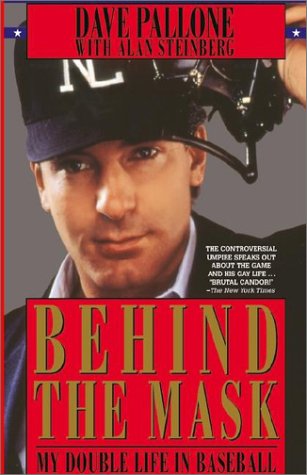
You know, I only got an interview with former closeted MLB umpire David Pallone after he published his memoir Behind the Mask. Same thing with Roy Simmons (Out of Bounds) , Esera Tuaolo (Alone in the Trenches) and Billy Bean (Going the Other Way). John Amaechi only publicly came out when his memoir Man in the Middle: My Life In and Out of Bounds was published in March 2007. Sure they all did some good coming out in the end, but they also made a buck from it only when they had nothing else to lose – when their playing days were over.
Personally, I’m with NBA Dallas Mavericks owner Mark Cuban who thinks that, in this climate, an openly gay NBA player would actually clean up. “From a marketing perspective, if you’re a player who happens to be gay and you want to be incredibly rich, then you should come out, because it would be the best thing that ever happened to you from a marketing and an endorsement perspective,” Cuban told the Fort Worth Star-Telegram after Amaechi came out. “You would be an absolute hero to more Americans than you can ever possibly be as an athlete, and that’ll put money in your pocket.”
Cuban continued, “On the flip side, if you’re the idiot who condemns somebody because they’re gay, then you’re going to be ostracized, you’re going to be picketed and you’re going to ruin whatever marketing endorsements you have.”
In fact, Rogers Sportsnet anchor Damian Goddard was fired on May 11 after tweeting in support of the anti-gay marriage stance taken by hockey agent Todd Reynolds. “I completely and wholeheartedly support Todd Reynolds and his support for the traditional and TRUE meaning of marriage,” Goddard tweeted on May 10.
(Xtra reports that while the tweet came from Goddard’s personal account, his profile identified him as a Sportsnet broadcaster and his thumbnail picture showed him at the Sportsnet news desk.)
So my advice to athletes is, if you’re gay, do us all and yourself a favour and come out when it really means something, when you’re still at the top of your game.